Project Overview
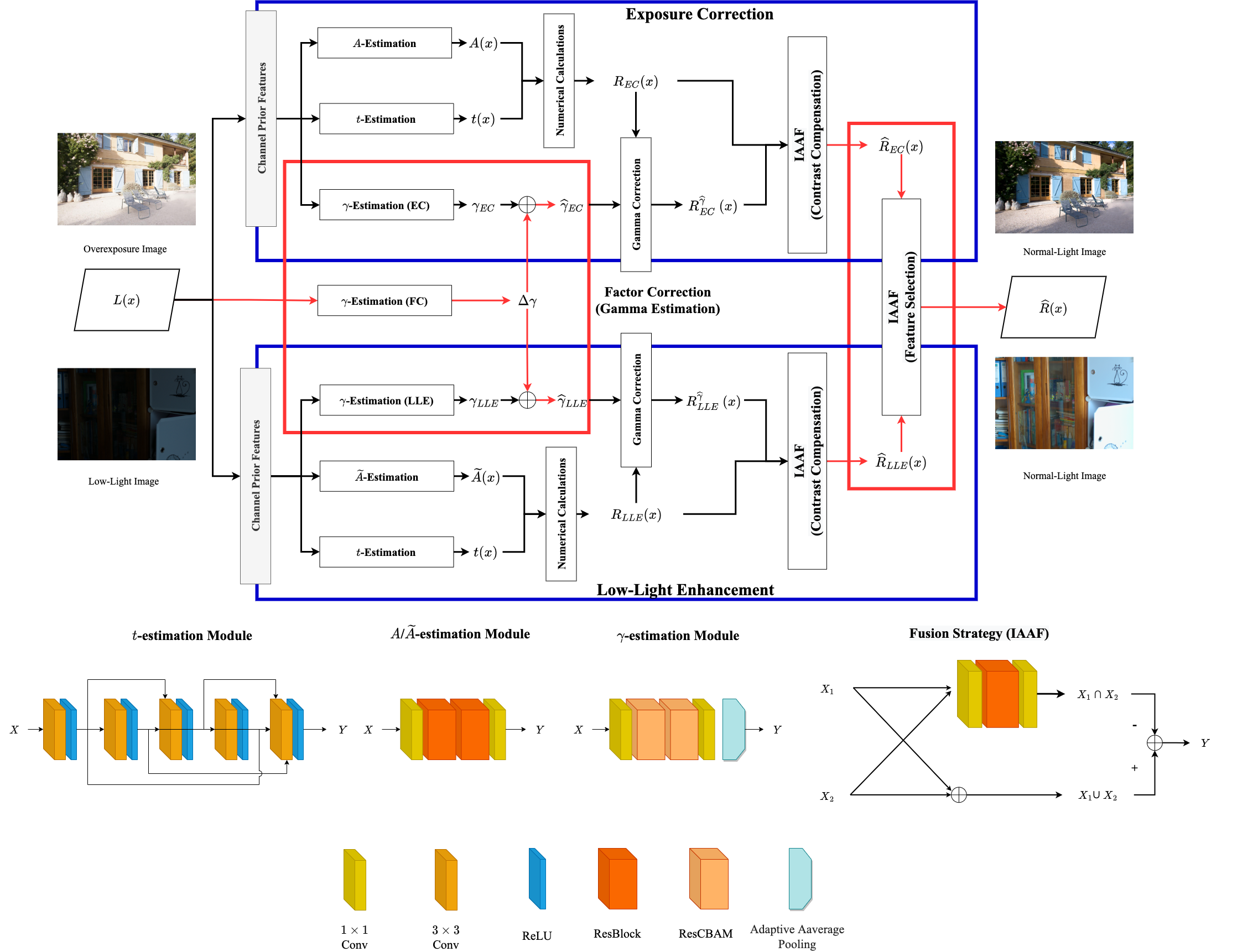
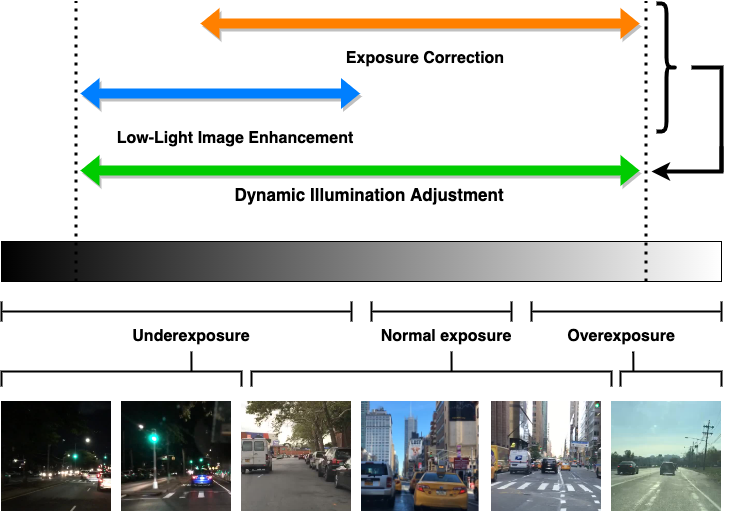
This project addresses the challenge of Dynamic Illuminance Image Enhancement in diverse lighting environments. From under-exposed night scenes to over-exposed daytime scenarios, the goal is to achieve balanced visibility. This work is supported by the NSTC-Research Project "Lightweight Multi-Task Learning for Dynamic Illuminance Enhancement in ADAS".
Core Techniques
1. Dynamic Illuminance Adjustment (CPGA-DIA)
Published in Signal, Image and Video Processing, this work proposes CPGA-DIA (Channel Prior Gamma Adjustment for Dynamic Illuminance Adjustment), a multi-task framework designed for Simultaneous Exposure Correction.
- Unified Correction: A single framework capable of handling both low-light (under-exposed) and over-exposed scenes simultaneously.
- Gamma Correction Prior: Introduces explicit gamma correction to effectively handle extreme lighting variations while avoiding color artifacts.
2. Scene-Guided Image Enhancement (SGIE)
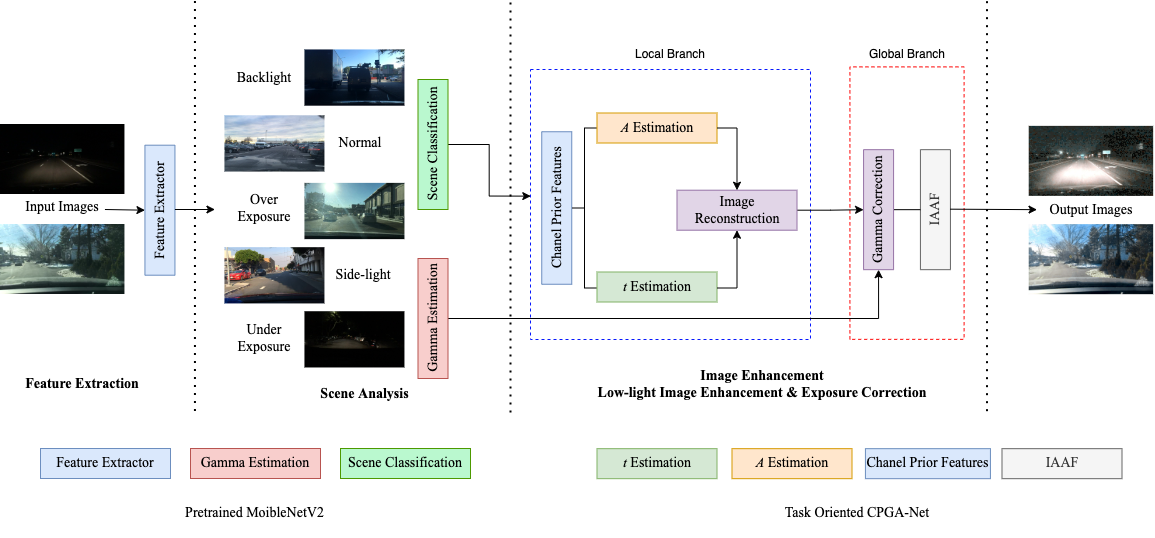
Presented at CVGIP 2024, this research introduces a Scene-Guided strategy leveraging Transfer Learning to adapt enhancement models to complex, varied illumination environments.
- Transfer Learning: Utilizes pre-trained knowledge to adapt to specific lighting domains, improving robustness.
- Scene-Guided Strategy: Classifies scene characteristics to dynamically adjust enhancement parameters for optimal visibility.
- Gamma Correction Prior: Retains the core benefit of gamma prior for consistent structural preservation.
Related Publications
Signal, Image and Video Processing, Sep 2024
DOI: 10.1007/s11760-024-03519-0
CVGIP 2024, Taiwan
Conference Article (PDF)